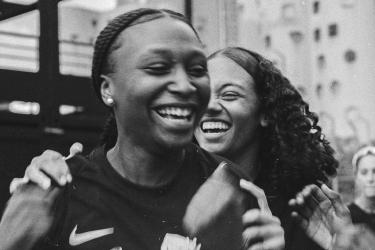
成为 NIKE, Inc. 团队的一员
NIKE, Inc. 不仅为全球精英运动员们提供装备,也为您提供一个探索潜能、消除界限和突破极限的工作场所。我们致力于寻找渴望成长、独立思考、心怀梦想并勇于创造的英才,同时倡导拥抱多元化、鼓励想象力的企业文化。我们渴望与实干家、领导者及远见者同行。在 NIKE, Inc.,每个人都能施展才华,满怀热情,积极应对充满挑战且不断变化的世界。
WHO YOU’LL WORK WITH
MAC BI is the business intelligence function for Nike's Marketing, Activity, and Converse organizations. We own the data pipelines, reporting platforms, and AI-powered insights that inform how Nike spends its marketing budget, understands its competitive position, listens to its consumers, and coaches its athletes. We're a team of engineers, analysts, and data scientists distributed across Beaverton and Bangalore, operating under Marketing Technology & Converse.
This role will report to the Director of Marketing BI.
WHO WE ARE LOOKING FOR
Nike is transforming its digital activity platforms (Nike Run Club, Nike Training Club) into AI-powered coaching experiences — and MAC BI is building the data and intelligence foundation that makes it possible. This role designs the data models that make it all work.
You'll own the logical and physical data architecture for the Activity domain — defining how wearable device streams from Garmin, Apple Watch, and COROS become a unified athlete profile, how structured training inputs (goals, baselines, injury history) merge with unstructured coaching data (notes, feedback, RPE), and how Nike Sport Research Lab's sport science models connect to production coaching recommendations. The models you design will be the contract between raw device data and the AI Coaching Engine that serves every athlete on the platform.
Must Have
- Bachelor’s degree in computer science, data science, data analytics, or a related field. Will accept any suitable combination of education, experience or training
- 5+ years of data modeling experience across analytical and operational data systems, with significant experience designing models for large-scale data platforms (Databricks, Snowflake, BigQuery, or equivalent)
- Deep expertise in dimensional modeling, Data Vault, or medallion architectures — you have strong opinions on when to use star schemas vs. wide tables vs. normalized structures, and you can justify those opinions with performance and usability tradeoffs
- Production experience designing models for multi-source data harmonization — you've solved the problem of taking data from multiple vendors/systems with different schemas and creating a unified, consistent representation that downstream consumers can trust
- Advanced SQL and data profiling skills — you can explore a new source system, understand its structure, identify quality issues, and design a target model in the same sitting
- Experience producing Source-to-Target Mappings — you've documented complete transformation paths from source to consumption layer and worked with engineers to implement them
- Strong collaboration skills with both engineering and analytics — your models need to be buildable by engineers and usable by analysts; you can speak both languages
Strong Preference
- Experience with IoT, wearable, or sensor data modeling — time-series schemas for device streams, handling irregular sampling rates, modeling device-specific metadata alongside measurement data
- Experience with health, fitness, or sport science data — athlete profiles, training load constructs, physiological measurements, or coaching/training plan structures
- Familiarity with Databricks/Spark physical design considerations — Delta Lake partitioning strategies, Z-ordering, liquid clustering, table optimization for both batch and interactive query patterns
- Experience with schema evolution and versioning strategies — managing model changes in production without breaking downstream consumers
- Comfort with async collaboration across time zones — clear documentation, self-explanatory model diagrams, and proactive communication
Nice to Have
- Familiarity with Nike's internal data platforms (Sole, Databricks on Nike infra)
- Personal background in endurance sports, coaching, or sport science (you understand the domain because you've lived it)
- Experience with data privacy modeling for health/fitness data (PII handling, consent-based access patterns)
- Experience modeling for ML/AI consumption — feature stores, training datasets, or model input/output schemas
WHAT YOU’LL WORK ON
Data Architecture & Modeling
- Design the unified athlete profile data model — the canonical schema that harmonizes wearable device streams (heart rate, pace, cadence, elevation, sleep, HRV, VO2max, body battery/recovery) from multiple vendors into a single, query-optimized representation on Databricks/Sole
- Model the coaching intelligence data layer — defining how structured inputs (intake questionnaires, training goals, fitness baselines, injury/pain history) and unstructured inputs (coach notes, athlete feedback, session RPE) are organized, linked, and exposed for consumption by the AI Coaching Engine and coaching dashboards
- Design the NSRL-to-athlete data model — the schema that translates Nike Sport Research Lab's sport science constructs (Horwill's predictors, Daniels VDOT, Acute Chronic Workload Ratio, training periodization models) into production-ready data structures that coaching algorithms can consume at scale
- Own the Bronze/Silver/Gold medallion layer design for the Activity domain — defining the transformation contracts, grain, and business rules at each layer within the MAC BI standardized pipeline template
Source-to-Target Mapping & Integration
- Produce Source-to-Target Mappings (STMs) for all Activity data sources — documenting the complete transformation path from raw device vendor schemas through to Gold-layer consumption models
- Handle the modeling complexity of multi-vendor device data — resolving schema conflicts, mapping equivalent metrics across devices (e.g., Garmin Body Battery vs. Apple Watch recovery estimates vs. COROS stamina), defining rules for when sources overlap or conflict
- Design data contracts between the Activity data foundation and downstream consumers — defining the API schemas, refresh cadences, SLAs, and versioning strategy that NRC/NTC product teams, the AI Coaching Engine, and coaching staff tools depend on
- Model race and sport experience data — training plan structures, race-specific schemas (5K through ultra), in-race coaching signal formats, and post-race performance analysis structures across NRC marathon programs
Data Quality & Governance
- Define data quality rules at the model level — embedding Spark Expectations checks, referential integrity constraints, and business rule validations directly into the model design so quality is structural, not an afterthought
- Establish the Activity data dictionary and catalog — authoritative definitions for every entity, attribute, metric, and relationship in the Activity domain, maintained as a living artifact that evolves with the platform
- Own the schema evolution strategy — how do the models handle new device vendors, new sensor types, new sport science models, and new coaching features without breaking existing consumers?
- Partner with data analysts to validate that model designs support the analytical use cases — ensuring the metric layer, dashboards, and ad-hoc analyses can be served efficiently from the physical model
What Success Looks Like (First 12 Months)
- The unified athlete profile model is in production — wearable device data from multiple vendors flows through a single, well-documented schema that downstream systems depend on
- Source-to-Target Mappings are complete for all Activity data sources and actively used by engineers building pipelines
- The coaching intelligence data model supports both the AI Coaching Engine and coaching dashboards without requiring separate transformations for each consumer
- The Activity data dictionary is established and adopted as the single source of truth for what the data means
- Schema evolution processes you designed have handled at least one new device vendor or sensor type without breaking existing consumers
- Data quality rules embedded in the model catch issues at ingestion time, not after they reach dashboards
We offer a number of accommodations to complete our interview process including screen readers, sign language interpreters, accessible and single location for in-person interviews, closed captioning, and other reasonable modifications as needed. If you discover, as you navigate our application process, that you need assistance or an accommodation due to a disability, please complete the Candidate Accommodation Request Form.
我们的招聘策略
01 申请
我们的团队拥有多元化的技能组合、知识库、意见、想法和背景。 希望你能找到适合自己的职位,因此请查看职位描述、部门和团队,找到适合你的职位。
02 与招聘人员会面或进行评估
如果被选中担任公司职位,招聘人员将会联系你开启面试流程,并在整个过程中担任你的主要联系人。 如果是零售职位,你需要完成互动式评估,包括聊天和测验,用时约 10 到 20 分钟。 无论担任什么职位,我们都希望充分了解你。因此,请尽情展现你如何提供世界一流的服务以及你的独特之处。
03 面试
从容开启这一阶段,做好充分调查,了解候选人标准并根据个人情况和背景准备可能会被问到的问题。